LinkZorg

Context
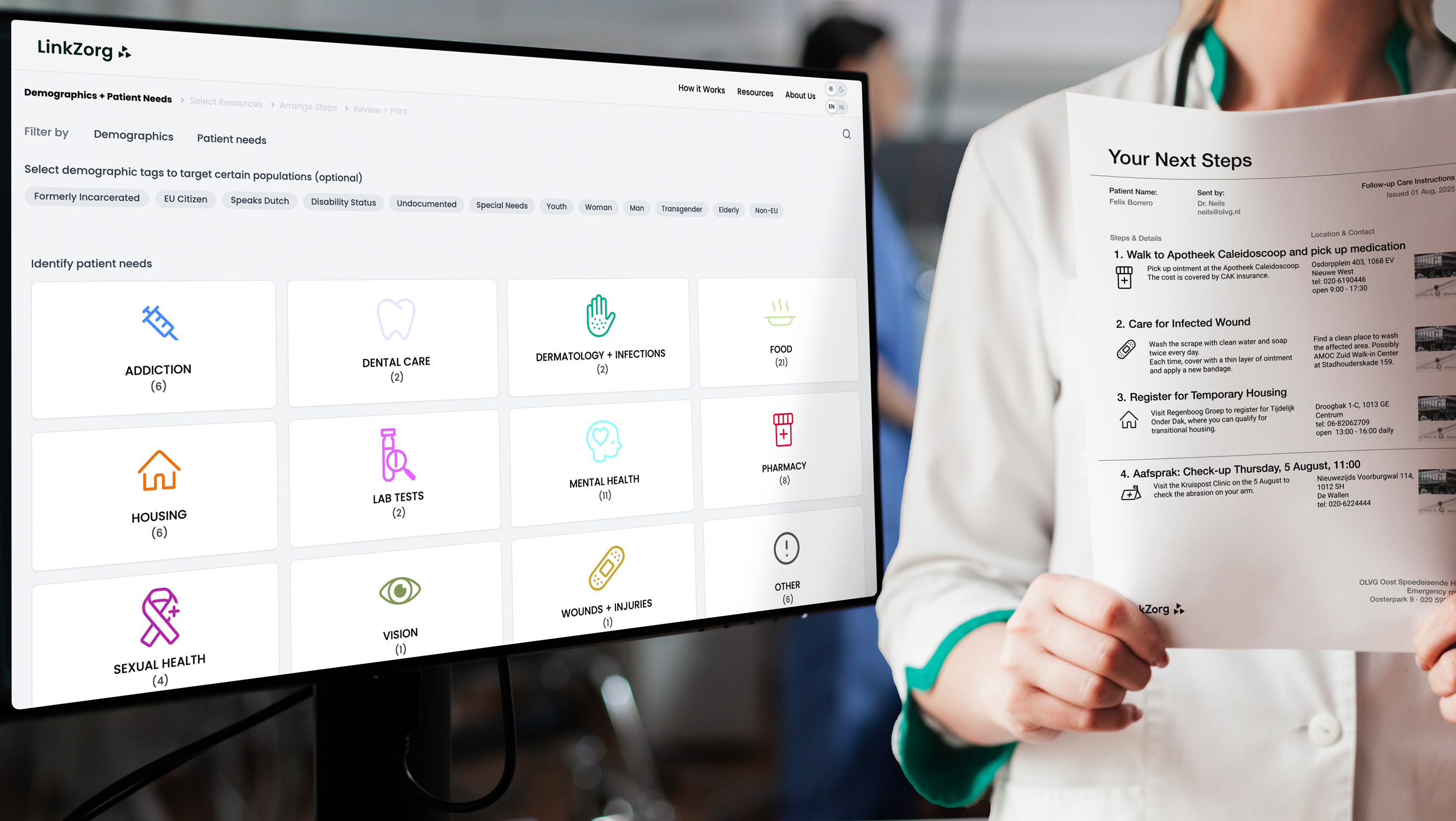
Emergency clinicians at OLVG Oost Hospital in Amsterdam often treat 3U patients—people who are “unhoused, undocumented, or uninsured”—and needed a solution to provide follow-up care and resources. LinkZorg is a simple digital platform that helps ER staff chart an after-care route for their 3U patients as they’re discharged from emergency care.
The tool helps identify suitable resources quickly, then generates a custom printout of instructions for the patient.
Research
What we found:
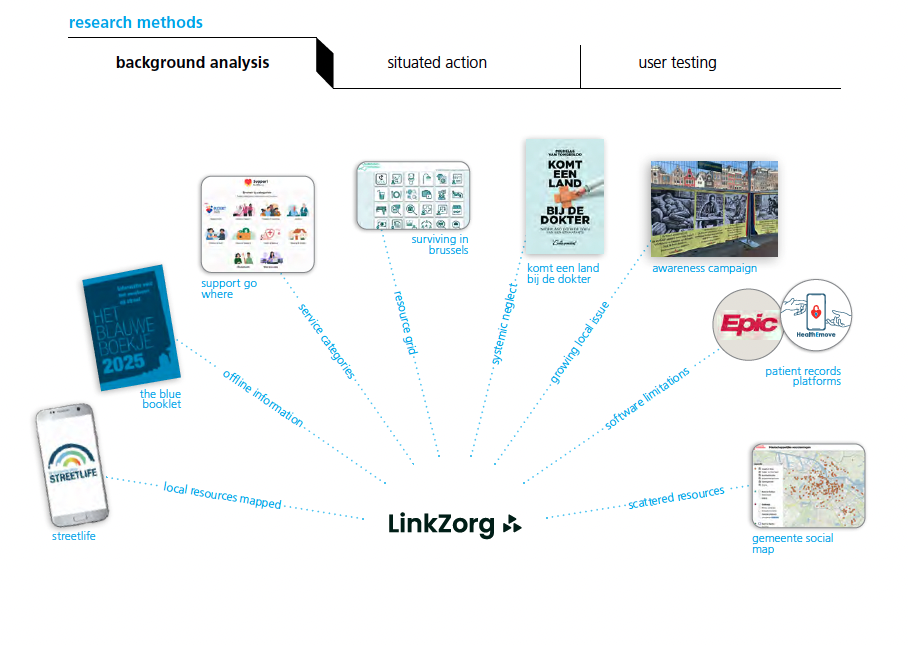
- Existing resources are fragmented across PDFs, emails, and personal networks.
- Information must be fast to scan during a shift.
- Guidance must be accessible for patients with different literacy, language needs, or without reliable internet access.
- Digital solutions should support human-to-human warm handoffs, not replace them.
Solution
We built a filtered database and printable care plan generator that mirrors how ER staff actually work. The platform is grounded in three principles: Trust, Connection, and Empowerment.
The workflow is intentionally simple:
- Identify patient needs
- View filtered caregivers
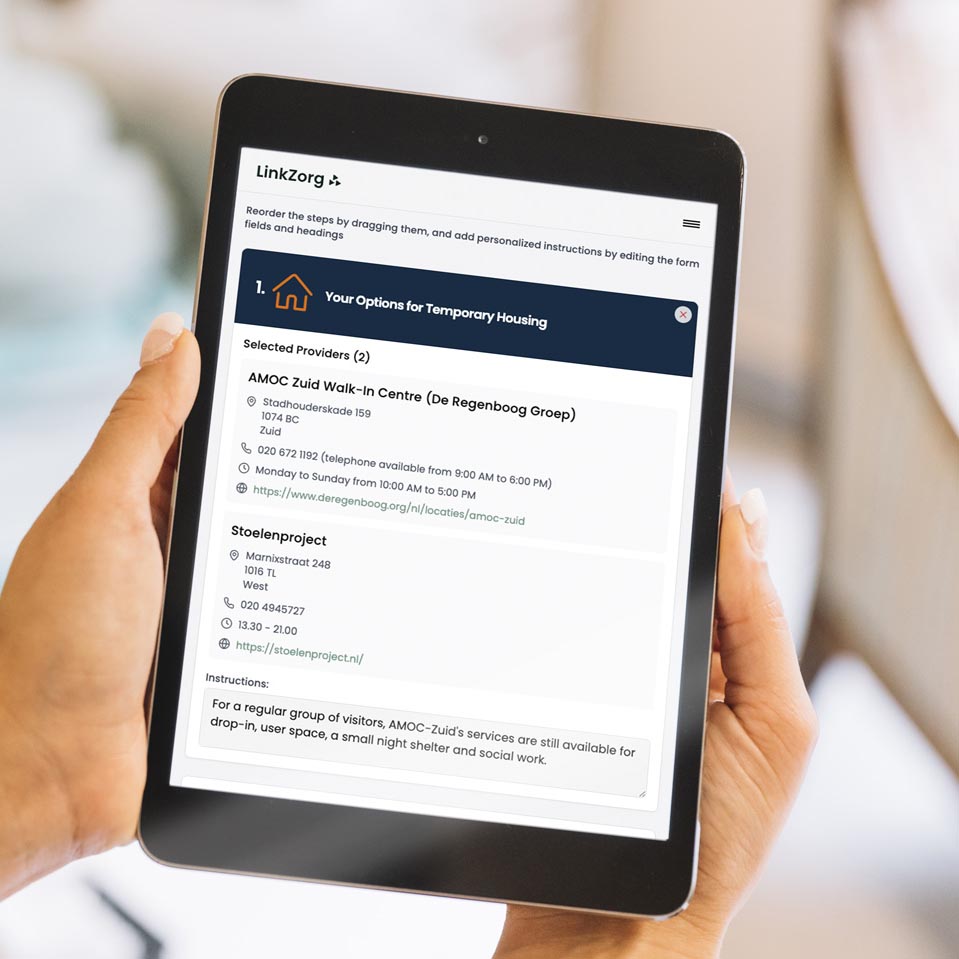
- Select relevant resources
- Generate a one-page aftercare plan
Product Features
The database includes shelter, primary care, food access, mental health, addiction support, crisis services, pharmacies that do not require insurance, and legal assistance—organized for quick scanning during a shift.
Each resource card shows hours, location, eligibility, and contact info. A bilingual Dutch/English toggle and a black-and-white printout support readability.
My Role
I led concept and product development in a team of three, facilitating design sprints, crafting the UI and care plan templates, and coordinating stakeholder engagement including field research and focus groups.
Impact
LinkZorg is actively used in OLVG Oost's Emergency Department, where it helps staff provide personalized care plans to vulnerable patients. The project catalyzed new coordination between previously fragmented care providers across Amsterdam, creating the database helped establish a more cohesive network. Hospital staff can now do more for their patients, who leave with information that empowers them to meet their needs beyond crisis recovery.