Shelters for Migrating Species
.jpg)
Context
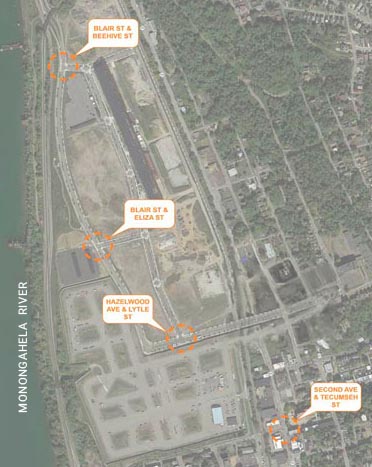
Shelters for Migrating Species is a series of transit shelters created for Hazelwood Green, the largest riverfront redevelopment in Pittsburgh's history. The challenge was to knit together the existing neighborhood and new development with a system to serve residents, commuters, and provide something for all living things who are on the move.
Design Process
Our process moved from concept to fabrication through eight core phases:
Created the Migrating Species narrative and proposal that won the commission.
Evaluated candidate intersections for lighting, drainage, power, visibility, and use patterns.
Reviewed global shelters to prioritize durable, simple forms that supported custom artistic layers.
Visited local fabrication shops to confirm materials, capabilities, and minimize transport.
Managed inputs from community leaders, the transit authority, utilities, developers, and city agencies.
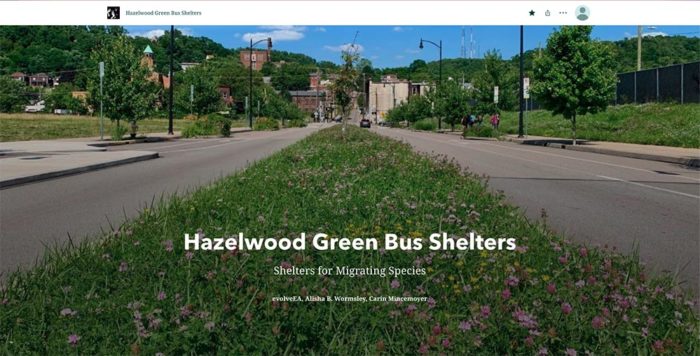
Used StoryMap, pop-ups, and events to gather stories and refine themes.
Finalized frame colors, etched glass motifs, artist components, lighting, and solar beacons.
Coordinated build details, material procurement, and installation sequencing.
Concept Development
The concept highlights migration across species, time, and terrain. Key elements include:
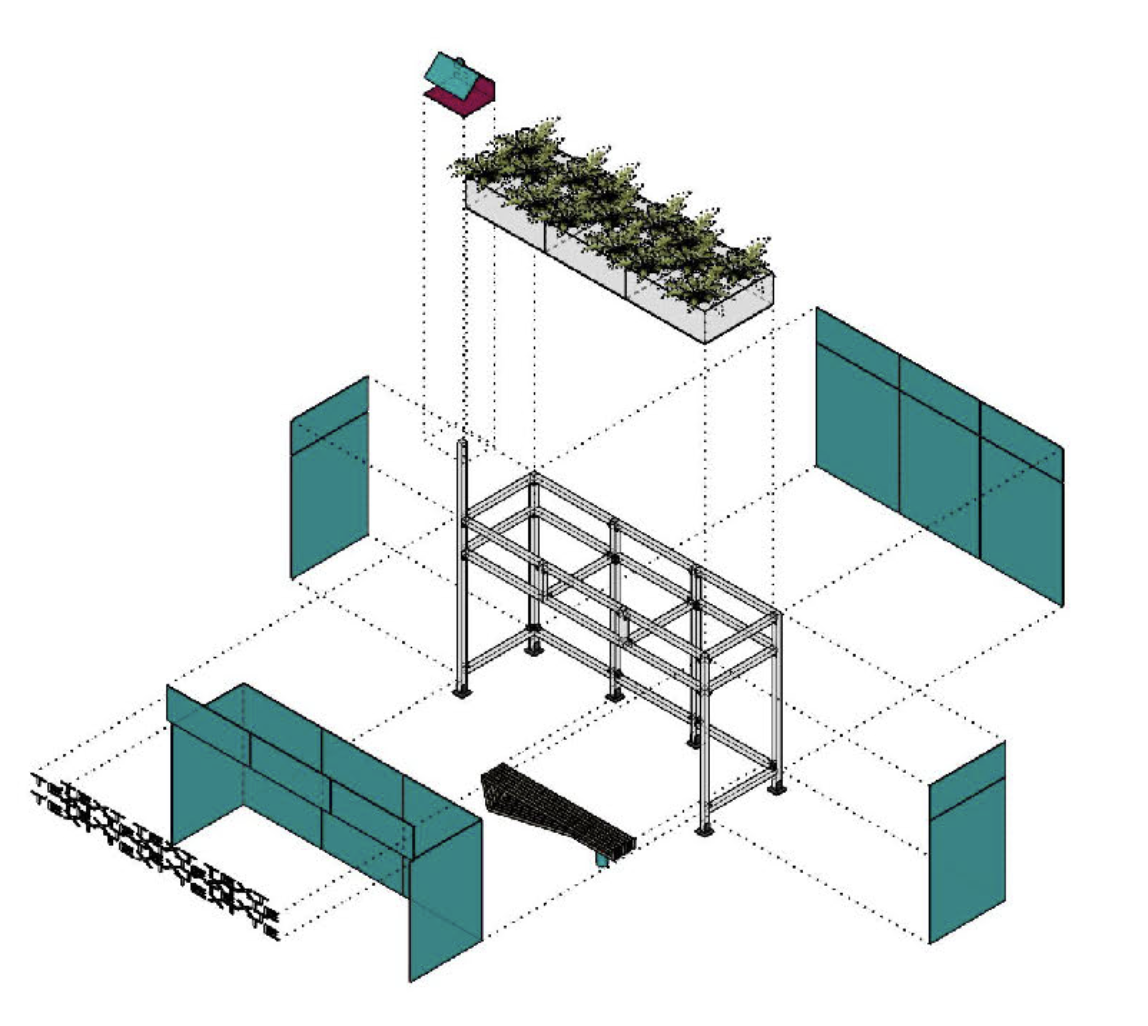
- a "kit of parts" integrating art, function, and local storytelling
- four site-specific themes: The Mound, The River, The Green, and The Time Capsule
- a bold color palette for wayfinding
- locally fabricated steel and glass for durability and sustainability
These choices kept the forms simple and functional while allowing expressive artistic layers.
Community Engagement
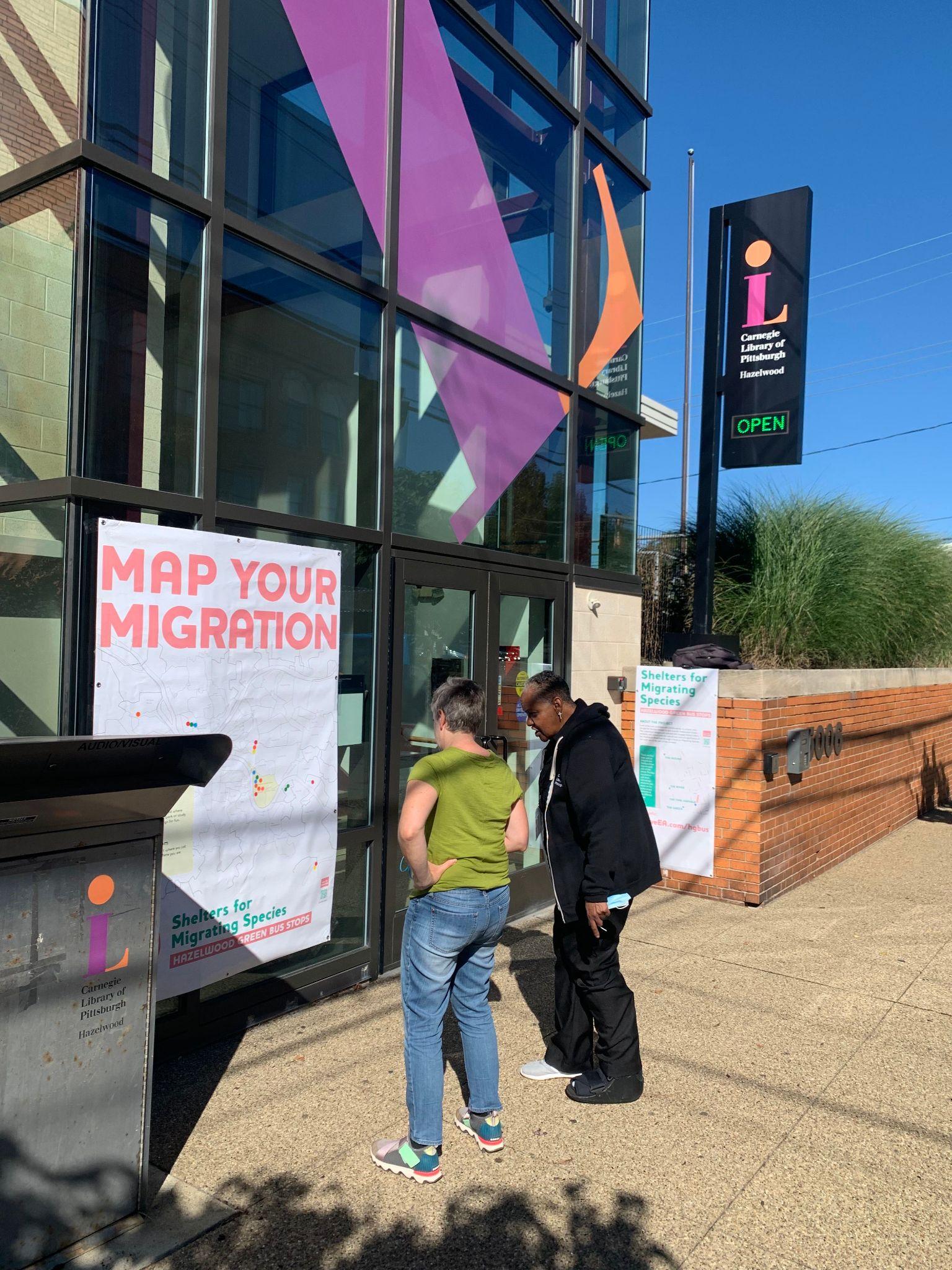
We used a mix of in-person and digital engagement, including a StoryMap, sidewalk pop-ups, neighborhood meetings, and sessions with community organizers. Feedback was continuous and shaped everything from the narrative framework to the physical components of the shelters.
Engagement combined open-ended storytelling with place-based input. Riders contributed to the Migration Map and “I Wish This Was” boards. Quotes collected by the artists appear on changeable marquee signs, ensuring the shelters remain a living reflection of Hazelwood’s voice.
“
”
— Community Member
Final Design
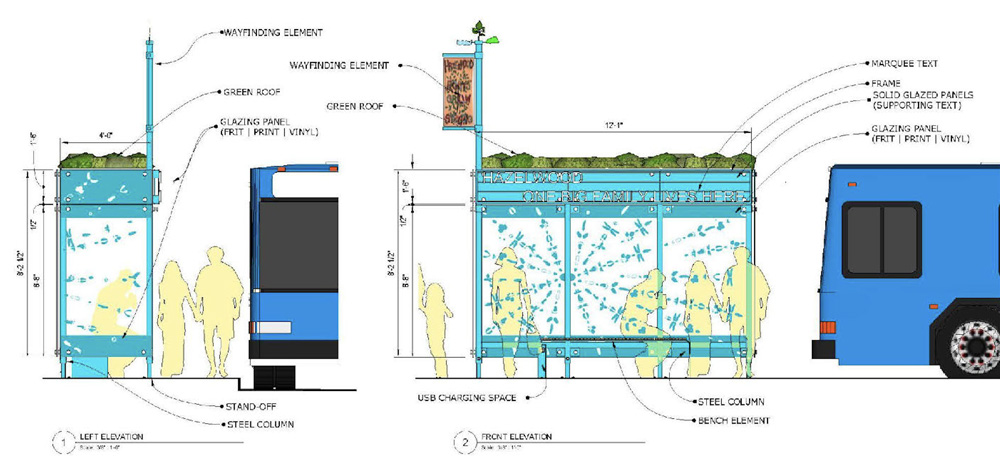
Each shelter pairs a clean structural frame with custom artistic components:
- glass etchings referencing Monongahela petal gardens
- quilted banners made with community members
- reused billboard materials transformed into graphic panels
- wayfinding beacons pointing toward the river and hillside
Inbound and outbound shelters at each stop use distinctive colors to mark the landscape.
My Role
As the Project Manager with evolveEA, I led the concept development, authored the winning proposal to secure the contract, and assembled the artist and fabrication team. My responsibilities included site research, community engagement planning, stakeholder coordination, precedent analysis, resource and budget management, and guiding the design through municipal approvals.
I also developed the project's communications strategy, StoryMap content, and public presentations.
Project Team
- evolveEA: architecture + project lead
- Alisha B. Wormsley: artist
- Carin Mincemoyer: artist
- U3: client representative
- Technique AP: fabrication + installation
Impact
Currently under construction. The shelters will serve as physical and ecological connectors between old and new Hazelwood — transit infrastructure that also builds social infrastructure and urban habitat.